An Afshar Soumak Salt Bag (Namakdan), South Persia, Circa 1880 “This bag has a rectangular white lattice design with two horizontal rows of 4 compartments
No longer availableAN AFSHAR SOUMAK SALT BAG (NAMAKDAN), SOUTH PERSIA, CIRCA 1880 “This bag has a rectangular white lattice design with two horizontal rows of 4 compartments, each containing a small medallion with a central diamond formed by cross-hatching. The main border consists of a flower and vine meander on a dark blue ground with an outer guard consisting of reciprocal triangles. There is an alternating red and lime green chevron band of brocading at the top of the face and a similar band in different colours at the bottom. Numerous tasselled embellishments are located on the shoulder of the bag. The neck of the salt bag has the same design as the lower part of the bag except there is just a single rectangle. At the top of the neck is a closure area with slit panels each decorated in a two-colour chequerboard pattern. The sides are original with a single cord overcast in madder dyed wool. Although the entire face is in weft-wrapped soumak weave with no plain weave obvious, the back of the bag is in kelim in red-dyed wool, with natural ivory warps. Decorative bands occur across the rear surface, including the base area of the neck, in alternating red and lime-green countered weft twining. The neck has five decorative bands with a final row of weft twining with plaited loops extending towards the slits on the inner surface.” (Benjamin, op.cit., LITERATURE: 3rd ed., 2004, pp. 68-69 “A similar type salt bag is illustrated in Bread and Salt (image 112, Tanavoli, P. Ketab Sara company Publishers, Tehran, 1991) and is said to have been woven by the Afshars of Shahr-e Babak, in NW Kerman Province.” (Benjamin, op.cit., p. 68)
More from Rugs & Home Textiles
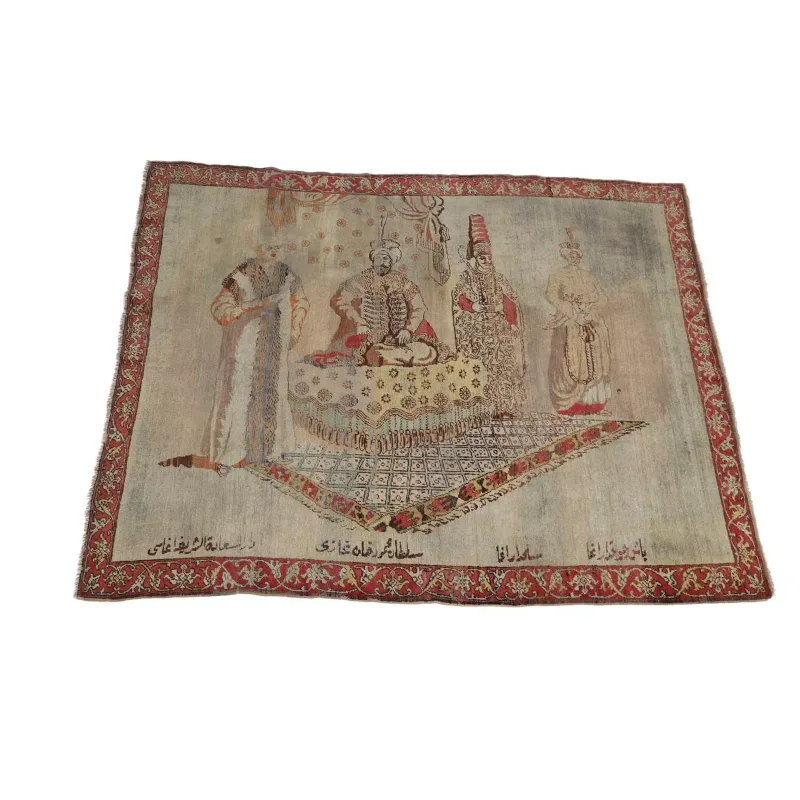
A Turkish Pictorial Rug woven with a court scene, the sultan seated beneath a canopy and attended by courtiers, with
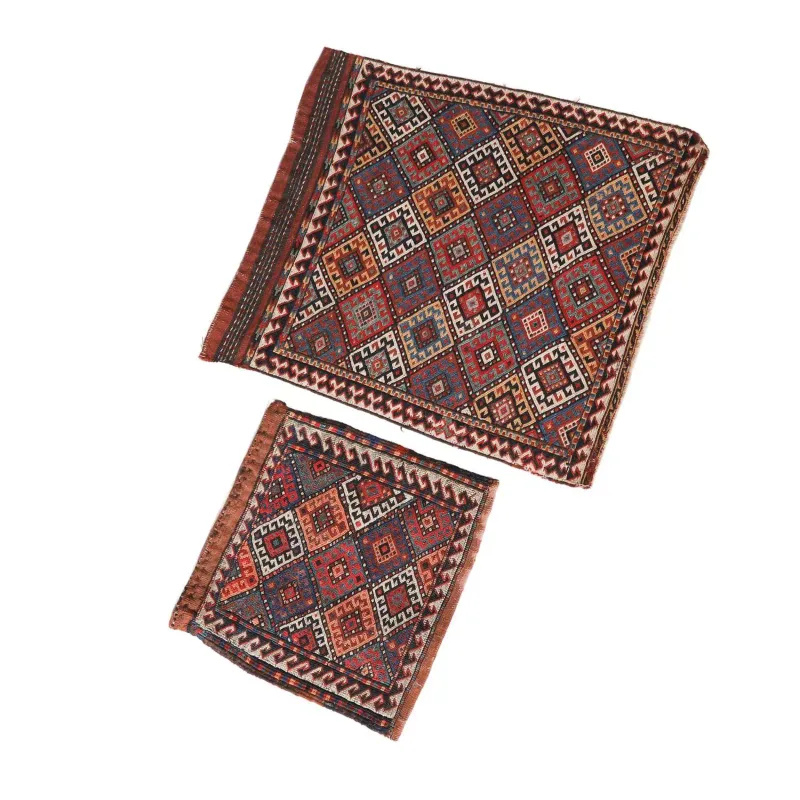
Two Shahsavan Soumak Bags North West Persian, early 20th Century, comprising a complete bag and a bag face
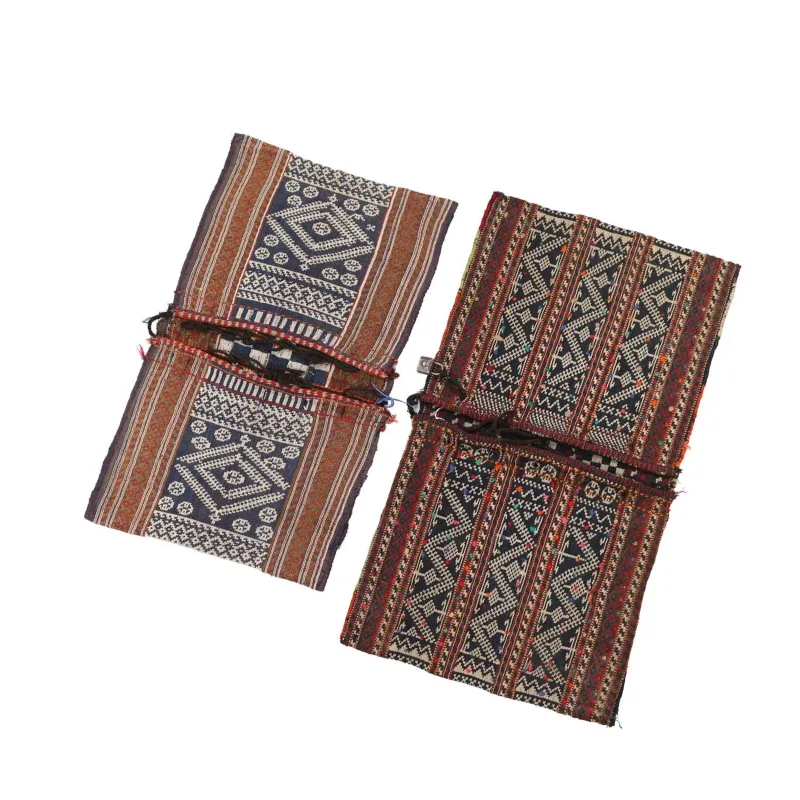
Two South Persian Flatwoven Double Bags early 20th Century
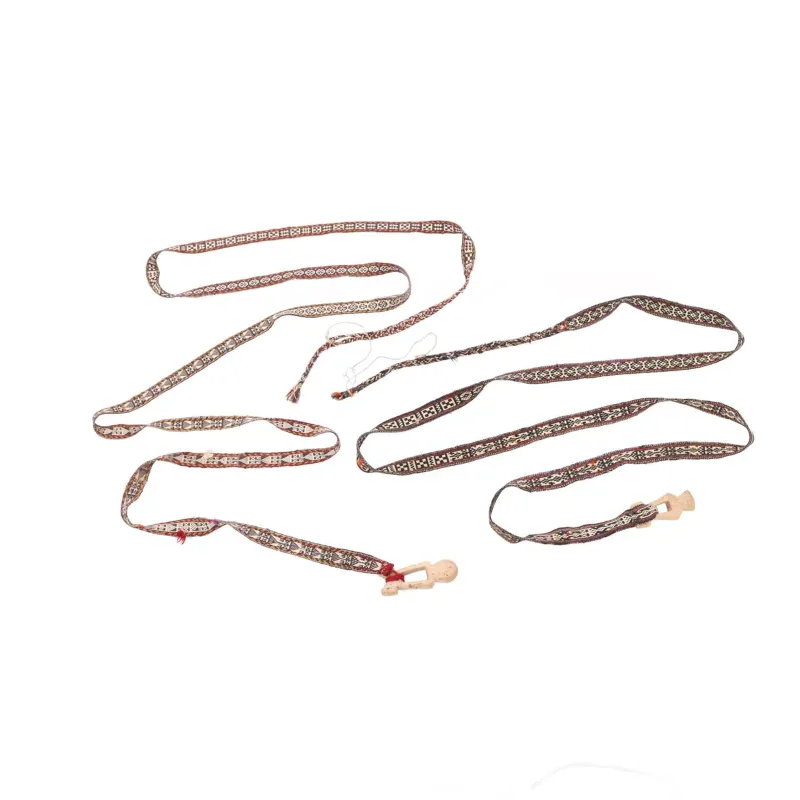
Two Central Asian Tablet-Woven Camel Straps early 20th Century, each narrow band woven with a continuous geometric design in red, ivory and brown
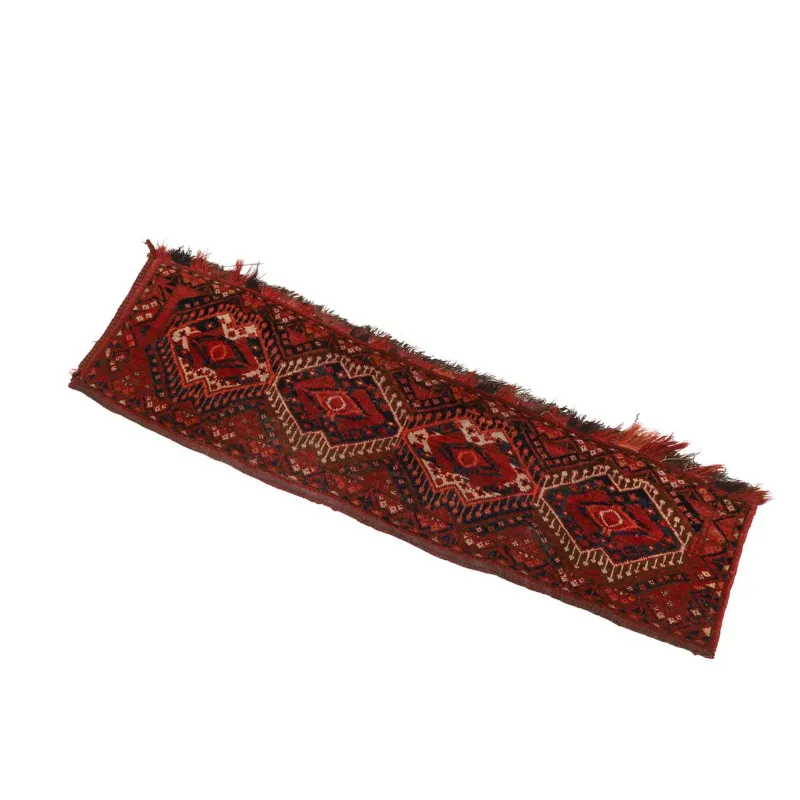
A Turkmen Torba
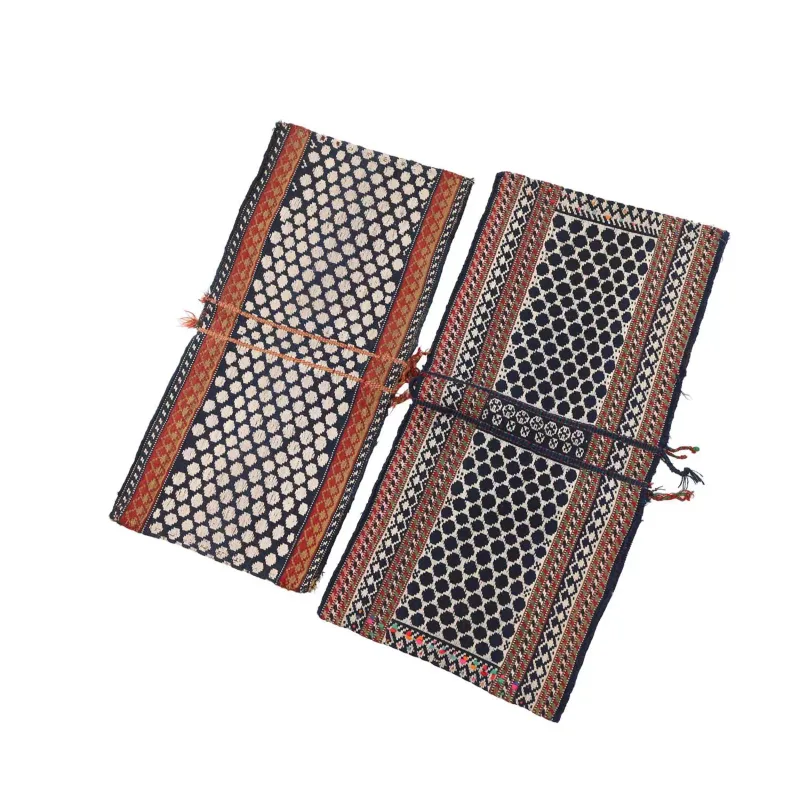
Two South Persian Flatwoven Double Bags early 20th Century, probably Qashqai, each brocaded with a lattice of ivory flowerheads on an indigo ground