A Pair Of Qashqa'i Double Bag Faces, South Persia, Mid 19th Century “Of large hooked medallion type with Memling guls
No longer availableA PAIR OF QASHQA'I DOUBLE BAG FACES, SOUTH PERSIA, MID 19TH CENTURY “Of large hooked medallion type with Memling guls. This is an early example of the standard diamond-shaped hooked medallion type with flanking polygonal hooked medallions of the Memling type. The design of both bag faces is similar with some variation in the details of the fillers in the outer field. The inner field has the usual central endless knot with four latched-hook medallions located in each quarter interspersed with four-legged animals. Linked flowers heads form a continuous chain at the edge of the central medallion. The outer dark blue field, contrasting with the dark red of the medallion, contains a random collection of the usual diamond, rosette and small humanoid forms often seen in SW Persian bags and rugs. The main border is the usual geometrical meander on an ivory ground. Two guards are in a diagonal band design in two or three colours, some missing. The two bag faces were separated and they lack the usual closure region and the ends. The backs are missing as well. Selvedges: some are missing, 5 warps overcast in red weft wool. The bag weaving structure is of asymmetrical knotting, open to the left, with grey and brown warps and red wefts.” (Benjamin, op.cit., LITERATURE: 3rd ed., 2004, pp. 88-89 “This is a very beautiful example of a well-known type, fine and with lovely colours. It may be very early, perhaps before 1850. It is conserved by being mounted on linen. There are many examples in the literature, one with the Memling guls in Hali (issue 20, page 446, Dodds, D.R, Qashga’i Khorjins in Philadephia ). The chain of flower heads is an unusual feature.” (Benjamin, op.cit., p. 88)
More from Rugs & Home Textiles
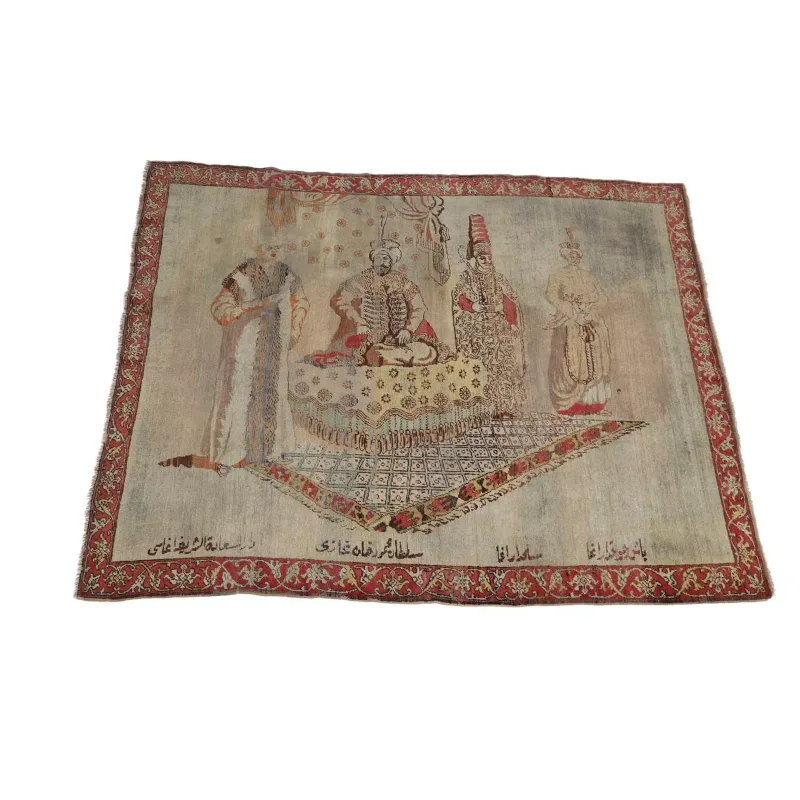
A Turkish Pictorial Rug woven with a court scene, the sultan seated beneath a canopy and attended by courtiers, with
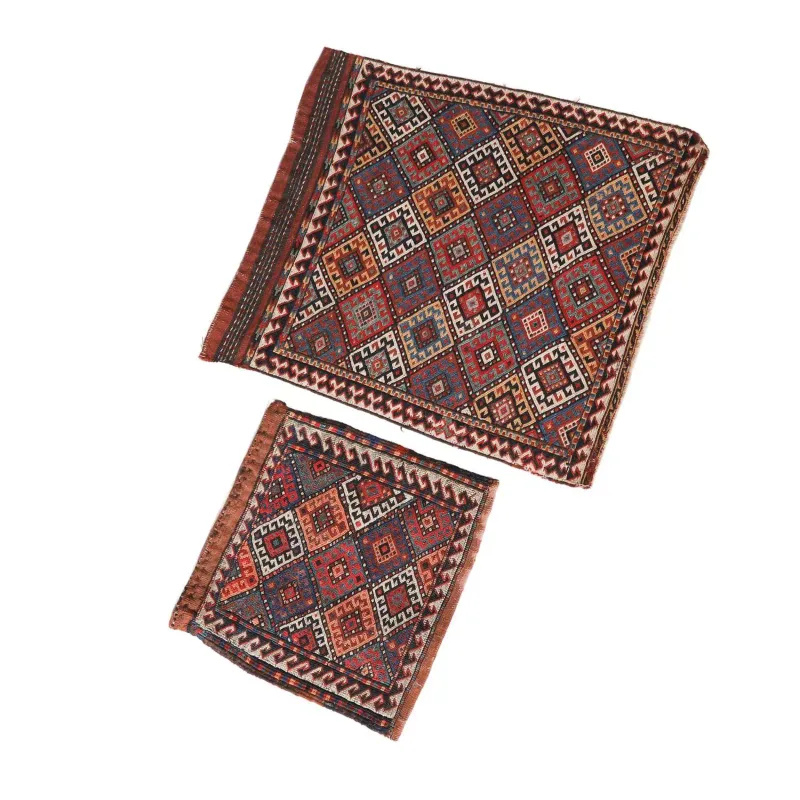
Two Shahsavan Soumak Bags North West Persian, early 20th Century, comprising a complete bag and a bag face
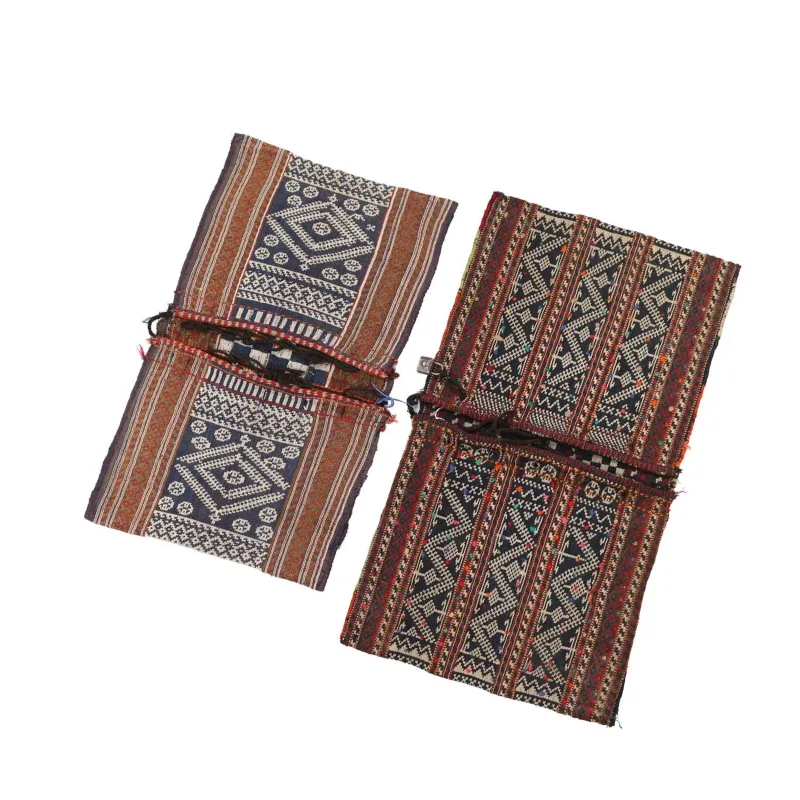
Two South Persian Flatwoven Double Bags early 20th Century
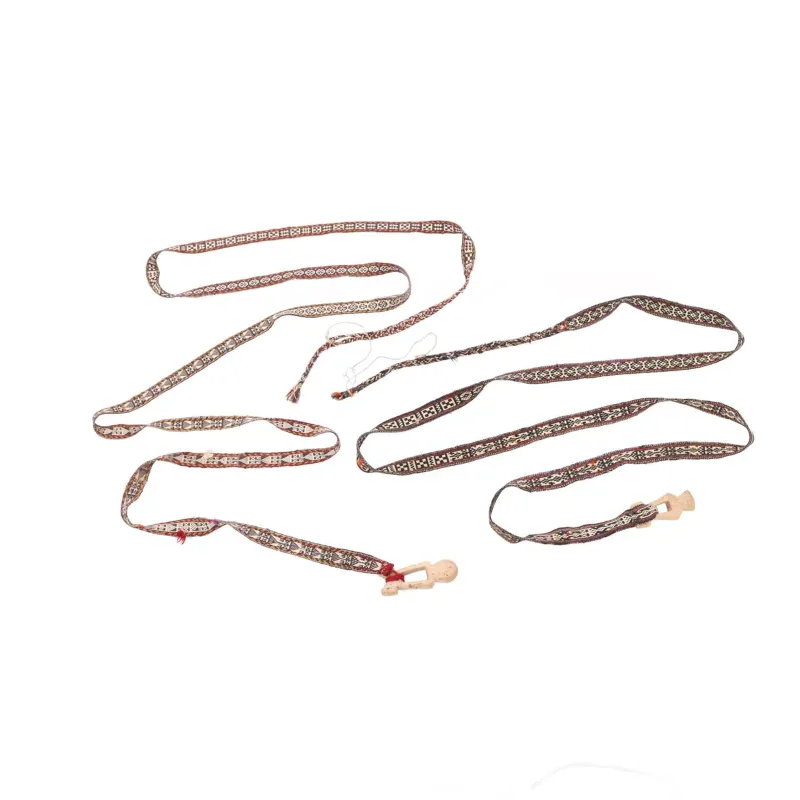
Two Central Asian Tablet-Woven Camel Straps early 20th Century, each narrow band woven with a continuous geometric design in red, ivory and brown
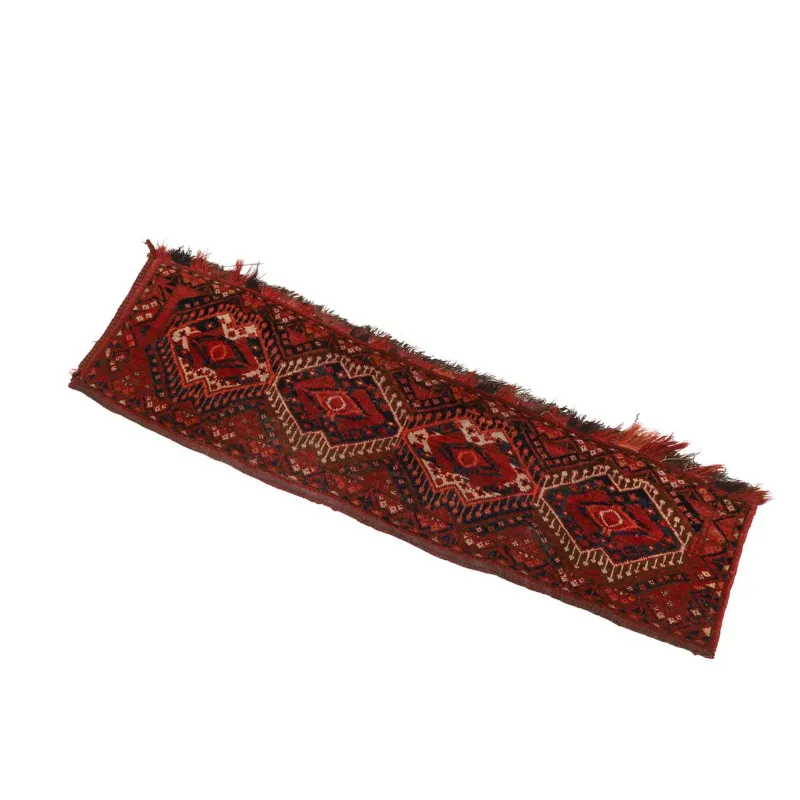
A Turkmen Torba
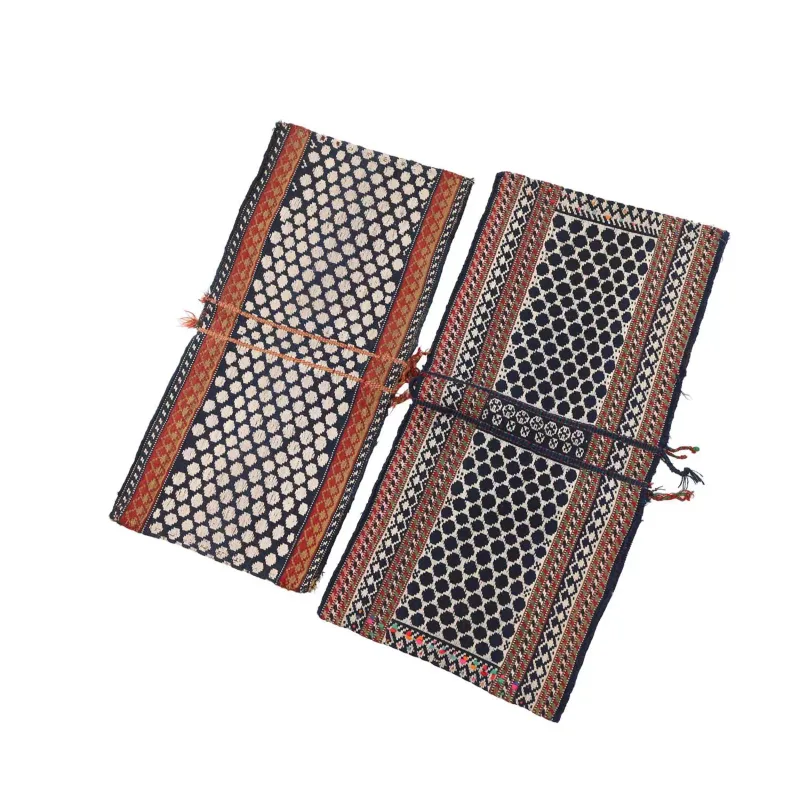
Two South Persian Flatwoven Double Bags early 20th Century, probably Qashqai, each brocaded with a lattice of ivory flowerheads on an indigo ground